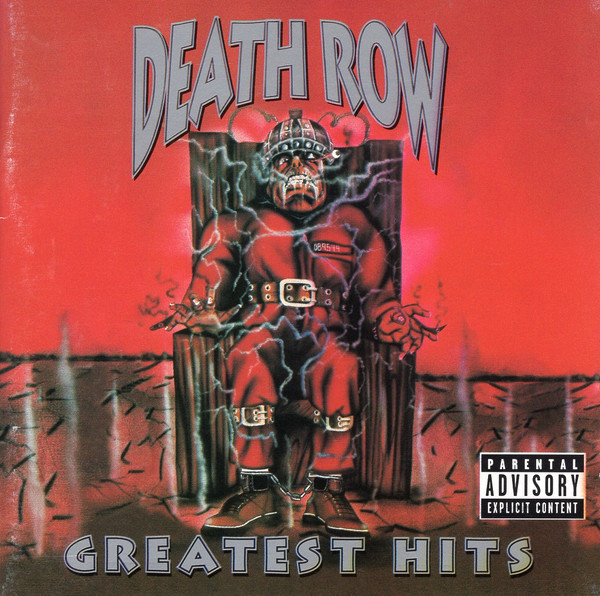
Released in 1996 at the apex of Death Row Records’ commercial and cultural dominance, Death Row Greatest Hits serves as both a victory lap and a strategic catalog compilation from one of hip-hop’s most influential and controversial labels. The compilation arrives during a pivotal moment when the label’s roster—anchored by Dr. Dre, Snoop Doggy Dogg, and Tupac Shakur—had fundamentally reshaped West Coast hip-hop’s sound and marketplace viability. More than a simple greatest hits package, this collection documents the G-funk era’s defining artistic statements while capturing the escalating tensions that would soon contribute to the label’s eventual implosion.
The production aesthetic that unifies much of this compilation remains its most enduring legacy. Dr. Dre’s meticulous G-funk blueprints, characterized by Parliament-Funkadelic samples, whining synthesizers, and deep sub-bass frequencies, established a sonic template that dominated mid-nineties hip-hop. Tracks like Nuthin’ But A G Thang and Let Me Ride demonstrate Dre’s ability to interpolate seventies funk into contemporary frameworks, creating music that felt simultaneously nostalgic and futuristic. The production standards set here influenced countless producers and effectively shifted hip-hop’s geographic center of gravity westward after years of East Coast dominance.
Snoop Doggy Dogg’s contributions showcase his effortless flow and distinctive laconic delivery that made him one of rap’s most recognizable voices virtually overnight. His selections range from the laid-back party atmospheres of Gin & Juice to the more menacing tones of Murder Was The Case, demonstrating his versatility within the gangsta rap framework. His ability to convey threat without aggression, to sound simultaneously dangerous and approachable, became a template for countless West Coast artists who followed.
Tupac’s presence on this compilation adds emotional depth and thematic complexity often absent from Death Row’s more hedonistic output. Tracks addressing maternal relationships, systemic poverty, and existential struggle provide counterbalance to the label’s gangster posturing. His dual capacity for introspective vulnerability and confrontational aggression is evident across his selections, showcasing why he remained hip-hop’s most complicated and compelling figure. The inclusion of material recorded both before and after his signing to Death Row illustrates his artistic evolution and the label’s eagerness to capitalize on his entire catalog.
The compilation unavoidably documents the East Coast-West Coast rivalry that would soon turn tragic. Several tracks either directly address or allude to the escalating tensions between Death Row and Bad Boy Records, between West Coast and East Coast factions. These confrontational moments, considered provocative entertainment in 1996, would retrospectively be examined as cultural artifacts of a rivalry that contributed to two murders and fundamentally altered hip-hop’s trajectory. The compilation thus serves as both celebration and cautionary tale.
The inclusion of numerous remixes demonstrates Death Row’s commitment to maximizing their catalog’s commercial potential while providing DJs and radio programmers with alternative versions for different contexts. These reworked versions often emphasize different sonic elements or adjust explicit content for broader airplay, illustrating the label’s sophisticated understanding of market segmentation even as they cultivated an outlaw image.
Cultural impact extends beyond music into fashion, language, and lifestyle branding. Death Row’s aesthetic—lowriders, Dickies, Pendletons, and chronic consumption—became aspirational iconography for suburban and urban youth alike. The label successfully marketed a Los Angeles street lifestyle to global audiences, creating a cultural export as significant as any regional sound that preceded it. This compilation captures that cultural moment when West Coast gangsta rap achieved unprecedented mainstream acceptance while retaining street credibility.
The album’s legacy is necessarily complicated by subsequent events. Within two years of this release, Tupac would be murdered, Dr. Dre would depart to form Aftermath Entertainment, and Death Row would begin its decline amid legal troubles and mismanagement. Viewed historically, this compilation represents the label’s apex, the moment before internal conflicts and external violence destroyed what had been hip-hop’s most commercially successful and artistically influential operation. As documentation of a specific era’s sound, attitude, and cultural sensibility, Death Row Greatest Hits remains essential, even as its context grows increasingly tragic with historical distance.
TRACK BY TRACK
1. Nuthin’ But A G Thang
Dr. Dre and Snoop Dogg’s breakthrough collaboration built around Leon Haywood’s interpolation, this track essentially defined G-funk’s commercial template and introduced Snoop’s distinctive flow to mainstream audiences.
2. Gin & Juice
Snoop’s signature solo hit samples George McCrae’s disco classic and depicts party culture with such effortless charisma that it transcended hip-hop to become a pop culture phenomenon.
3. Afro Puffs
The Lady of Rage’s standout contribution to the Death Row catalog showcases her aggressive delivery over production that nods to classic soul while maintaining West Coast hardness.
4. Natural Born Killaz
The collaboration between Dr. Dre and Ice Cube marked a reunion after years of tension following N.W.A’s dissolution, delivering sinister production and violent imagery that pushed gangsta rap’s boundaries.
5. Who Am I (What’s My Name?)
Snoop’s debut single announced his arrival with a Parliament sample and playful yet menacing verses that established his persona while demonstrating Dre’s sampling genius.
6. Keep Their Heads Ringin’
Dr. Dre’s contribution to the Friday soundtrack features funk guitarist Ricky Rouse’s sample and showcases Dre’s skills as both producer and MC during his post-N.W.A reinvention.
7. No Vaseline
Ice Cube’s devastating response track targeting his former N.W.A bandmates and manager Jerry Heller, widely considered one of hip-hop’s most effective and brutal confrontational tracks.
8. Doggy Dogg World
Snoop’s collaboration with Tha Dogg Pound features a mellow, melodic backdrop built around soul samples, with guest vocalists adding commercial appeal to street narratives.
9. Keep Ya Head Up
Tupac’s tribute to Black women and mothers samples Zapp’s funk groove, offering vulnerable introspection and social commentary that contrasted with gangsta rap’s typical misogyny.
10. Murder Was The Case
Snoop’s narrative about a near-death experience and Faustian bargain became the centerpiece of a short film, demonstrating Death Row’s multimedia ambitions and Snoop’s storytelling abilities.
11. Lil’ Ghetto Boy
Snoop’s reflective track about childhood poverty and street life’s cyclical nature shows his capacity for introspection beyond party anthems, featuring soulful production and earnest delivery.
12. Ain’t No Fun
Snoop’s posse cut featuring Nate Dogg, Warren G, and Kurupt addresses casual relationships and street masculinity with explicit content that epitomized Death Row’s uncompromising approach.
13. Lodi Dodi
Snoop’s cover of Slick Rick’s storytelling classic demonstrates his reverence for hip-hop tradition while adapting East Coast narrative style to West Coast production aesthetics.
14. Stranded On Death Row
The posse cut featuring Dr. Dre, Snoop, Kurupt, and others serves as a label showcase, with each artist delivering verses over ominous production that emphasizes Death Row’s collective strength.
15. The Shiznit
Snoop’s album track demonstrates his ability to ride complex, funk-infused beats with technical precision, featuring layered production that rewards repeated listening beyond radio singles.
16. Dear Mama
Tupac’s emotional tribute to his mother Afeni Shakur samples Joe Sample’s piano, becoming one of hip-hop’s most moving maternal tributes and showcasing his emotional range.
17. Me Against The World
The title track from Tupac’s third album captures his paranoid isolation and existential struggle, recorded during a period of intense legal troubles and personal turmoil.
18. Let Me Ride (Rmx)
The reworked version of Dr. Dre’s Parliament-sampling cruise anthem offers alternative production elements while maintaining the original’s laid-back California driving aesthetic.
19. Gin & Juice (Rmx)
The remixed version of Snoop’s signature hit provides radio and club DJs with alternative arrangements while demonstrating the song’s adaptability across different contexts.
20. Daydreaming
A lesser-known track that explores more introspective territory, demonstrating the label’s artists could navigate contemplative themes alongside their more confrontational material.
21. Who Am I (What’s My Name?) (Rmx)
The reworked version of Snoop’s debut single offers production variations while maintaining the infectious hook and Parliament foundation that made the original inescapable.
22. Nuthin’ But A G Thang (Rmx)
The remix of the quintessential G-funk track provides alternative sonic treatments while preserving the chemistry between Dre and Snoop that defined an era.
23. I Get Around (Rmx)
The reworked version of Tupac’s Digital Underground-era party track showcases his pre-Death Row work while demonstrating his evolution from playful to profound.
24. Lil’ Ghetto Boy (Rmx)
The remixed version of Snoop’s introspective track offers alternative production approaches to the original’s soulful foundation while maintaining its reflective tone.
25. Hit ‘Em Up
Tupac’s incendiary response track targeting Bad Boy Records and East Coast rivals represents the coastal rivalry’s most aggressive moment, recorded months before his death.
26. Who Been There, Who Done That?
A collaborative effort exploring Death Row’s collective identity and street credentials, featuring multiple artists trading verses over menacing production.
27. F— Wit Dre Day (Rmx)
The reworked version of Dr. Dre’s confrontational track targeting former collaborators Eazy-E and Luke maintains the original’s aggressive stance with alternative production elements.
28. Pour Out A Little Liquor
The memorial tradition of honoring deceased friends is explored through West Coast sonic frameworks, addressing mortality and street violence’s human cost.
29. What Would You Do
A contemplative track examining ethical dilemmas and street life’s moral complexity, demonstrating Death Row artists’ capacity for philosophical inquiry.
30. Come Up To My Room
A track addressing intimate encounters with production that balances gangsta rap’s aggressive elements with smoother, more seductive sonic textures.
31. Come When I Call
Exploring relationship dynamics within street contexts, this track features melodic elements that broaden Death Row’s sonic palette beyond hardcore production.
32. Me In Your World
A track addressing romantic connection across different life circumstances, demonstrating the label’s artists could navigate personal vulnerability alongside street narratives.
33. Smile For Me Now
A reflective closing track that addresses success, loss, and the complicated emotions of surviving street life to achieve fame and fortune.
VAULT CURIOSITIES
- The inclusion of Ice Cube’s No Vaseline is notable considering the track savagely attacks Dr. Dre and other former N.W.A members, yet appears on a compilation celebrating Dre’s label. This suggests either contractual obligations or Death Row’s recognition that the track’s quality transcended personal grievances, as Cube never actually signed to Death Row despite his West Coast affiliations.
- Several tracks on this compilation were recorded before Death Row Records existed, including Tupac’s Keep Ya Head Up and Dear Mama from his Interscope period and Ice Cube’s No Vaseline from Priority Records. This practice reflected common compilation strategies where labels included associated artists’ work to create more comprehensive packages, though it blurred the actual Death Row roster boundaries.
- The album’s release in 1996 coincided with Death Row’s peak commercial success but also marked the beginning of its decline. Dr. Dre was already planning his departure from the label due to creative and business differences with Suge Knight, and Tupac would be murdered just months after contributing some of his final recordings for the compilation and related projects.
- Multiple remix versions included on the extended tracklist demonstrate Death Row’s sophisticated approach to catalog management, creating additional product from existing material for different markets. These remixes often featured cleaner versions for radio play alongside alternative production that kept songs fresh for club DJs, maximizing revenue potential from hit recordings while maintaining street credibility through uncensored versions.
Leave a Reply