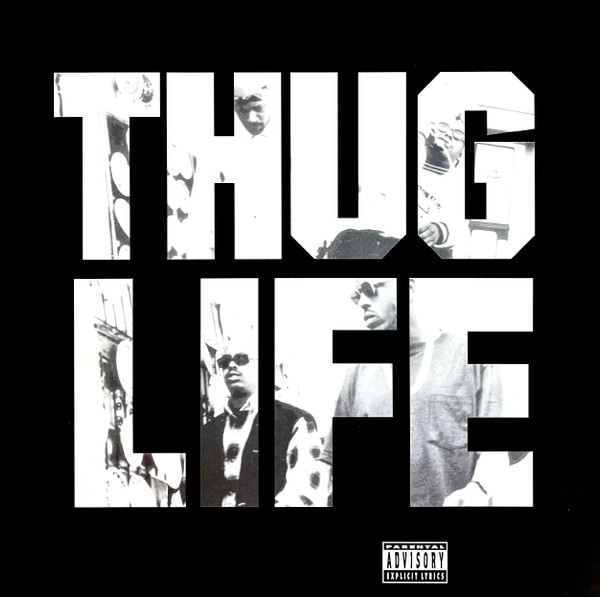
Thug Life’s Volume 1 stands as a crucial bridge in the evolution of West Coast hip-hop, arriving at a moment when gangsta rap was simultaneously reaching commercial heights and facing unprecedented societal scrutiny. Released in September 1994 on Interscope Records, the album represented 2Pac’s first major project following his legal troubles and the formation of his group Thug Life, which included Big Syke, Macadoshis, Mopreme Shakur, and The Rated R. The project emerged during a particularly turbulent period in hip-hop history, as the East Coast-West Coast tension was beginning to simmer and the genre faced increasing criticism from politicians and advocacy groups concerned about its violent imagery and explicit content.
The production on Volume 1 draws heavily from the G-funk sonic palette that dominated West Coast hip-hop in the mid-nineties, with contributions from producers including Big D The Impossible, Stretch, and Warren G. The album’s soundscape is characterized by heavy basslines, synthesizer melodies, and the kind of laid-back yet ominous grooves that had become synonymous with California street rap. The musical approach perfectly complements the thematic material, which explores street life, mortality, loyalty, and the systemic forces that perpetuate cycles of violence in urban communities. Unlike the more celebratory aspects of some gangsta rap, Volume 1 carries a melancholic undertone throughout, with several tracks contemplating death and the consequences of the lifestyle being depicted.
Lyrically, the album grapples with the contradictions inherent in street culture, simultaneously glorifying and mourning the gangster lifestyle. The group articulates a code of ethics that governs their world while acknowledging the futility and tragedy embedded in that very code. Tracks dealing with fallen friends and the ritual of memorial become recurring themes, establishing a tone of fatalism that would tragically prove prescient given 2Pac’s own fate less than two years later. The album also addresses the surveillance and pressure faced by those living outside mainstream society, exploring themes of institutional persecution alongside interpersonal conflicts.
The commercial performance of Volume 1 was respectable if not spectacular, reaching number 42 on the Billboard 200 and eventually achieving Gold certification. The album spawned the single that featured on the Above the Rim soundtrack, which had already introduced audiences to the Thug Life concept earlier in 1994. Despite not matching the commercial heights of 2Pac’s solo work, the album demonstrated his ability to function effectively within a group dynamic while maintaining his distinctive voice and perspective. The project also served to elevate the profiles of his collaborators, even if none would ultimately achieve the individual success that 2Pac himself commanded.
Critically, Volume 1 received mixed reviews upon release, with some praising its raw authenticity and others criticizing its explicit content during an era when gangsta rap faced intense media scrutiny. The album arrived in the aftermath of congressional hearings about rap music and just as various advocacy groups were pressuring retailers and labels to reconsider their relationship with controversial hip-hop artists. Interscope Records itself would soon find its distribution deal with Time Warner under attack, partially due to releases like this one. In retrospect, however, the album has been recognized as an important document of its era, capturing a specific moment in West Coast hip-hop history and showcasing 2Pac’s development as both artist and conceptualist.
The legacy of Volume 1 extends beyond its immediate commercial impact. The Thug Life code that 2Pac promoted, which attempted to establish rules of engagement for street conflicts to protect innocent bystanders, represented an idealistic if ultimately unsuccessful attempt to impose order on chaos. The album’s influence can be heard in subsequent West Coast releases that embraced similar themes of street loyalty, mortality, and the psychological toll of gang culture. For 2Pac scholars and fans, Volume 1 remains essential listening, representing his only official group album and capturing him at a pivotal moment in his career, poised between his earlier work and the more polished, introspective material that would follow on Me Against the World and All Eyez on Me.
TRACK BY TRACK
1. Bury Me A G
Opening track that establishes the album’s preoccupation with mortality and street codes, setting a somber tone for the project. The title reflects the pride and defiance embedded in gang culture’s approach to death.
2. Don’t Get It Twisted
A confrontational track addressing misperceptions and establishing the group’s street credentials. The production features典型 mid-nineties West Coast funk elements.
3. Shit Don’t Stop
This track emphasizes persistence and resilience within the street lifestyle, with group members trading verses about their unwavering commitment. Features a memorable hook that became one of the album’s standout moments.
4. Pour Out A Little Liquor
A somber memorial track dedicated to fallen friends, referencing the street ritual of pouring alcohol on the ground for the deceased. One of the album’s most emotionally resonant moments.
5. Stay True
Addresses themes of loyalty and authenticity, emphasizing the importance of remaining faithful to one’s origins and principles. Features introspective verses from multiple group members.
6. How Long Will They Mourn Me?
Perhaps the album’s most prophetic track, contemplating death and legacy with haunting prescience. Features Nate Dogg on the hook, adding melodic depth to the morbid subject matter.
7. Under Pressure
Explores the psychological stress of street life and constant surveillance from law enforcement. The production captures the claustrophobic feeling suggested by the title.
8. Street Fame
Examines the allure and consequences of reputation in gang culture, where notoriety can mean both respect and danger. Features rapid-fire delivery from multiple members.
9. Cradle To The Grave
A reflection on the inescapable nature of street life for those born into it, suggesting deterministic forces at play. One of the album’s more philosophical moments.
10. Str8 Ballin’
Closing track that showcases a more boastful side, celebrating success and material gains. The production features prominent synthesizers and a more upbeat tempo than much of the album.
VAULT CURIOSITIES
- The Thug Life group took its name from an acronym 2Pac created: The Hate U Give Little Infants Destroys Everyone, which he later had tattooed across his abdomen. This concept represented his attempt to articulate how societal neglect of youth creates the violence society then condemns, a philosophical framework underlying much of Volume 1’s content.
- Volume 1 was intended to be the first of multiple Thug Life albums, but the group disbanded shortly after its release due to 2Pac’s incarceration and subsequent signing to Death Row Records. The planned Volume 2 never materialized, making this the only official Thug Life studio album despite the numerical designation.
- The album was recorded at Can-Am Studios in Tarzana, California, during a particularly chaotic period when 2Pac was facing multiple legal cases. Some sessions allegedly occurred while he was out on bail, adding urgency and authenticity to the project’s themes of persecution and street pressure.
- Following its release, 2Pac himself expressed some regret about the album’s explicit content, later stating in interviews that he felt some material was too raw and could negatively influence young listeners. This represented an evolution in his thinking about artistic responsibility that would inform his subsequent work, particularly Me Against the World.
Leave a Reply