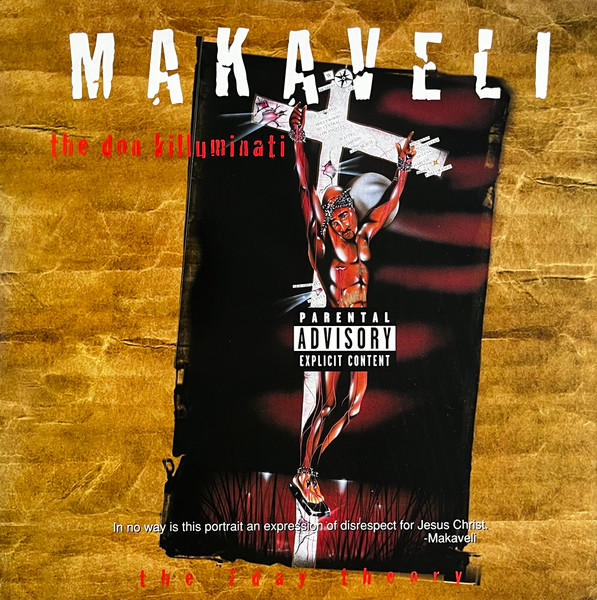
Released in November 1996, just two months after Tupac Shakur’s fatal shooting in Las Vegas, The Don Killuminati: The 7 Day Theory stands as one of hip-hop’s most haunting and prophetic final statements. Recorded in a feverish three-day session in August 1996, the album represented Shakur’s creative rebirth under the Makaveli pseudonym, inspired by the Italian political philosopher Niccolò Machiavelli whose works on power and strategy Shakur had studied while incarcerated. The album’s title referenced both the conspiratorial Illuminati theories that fascinated Shakur and the remarkably brief seven-day period from recording to mixing completion, though the actual tracking took place over three days with subsequent production refinements.
Sonically, the album marked a departure from the polished G-funk aesthetic that had defined much of Death Row’s output. Producers including Hurt-M-Badd, QD3, and Darryl Harper crafted darker, more ominous soundscapes built on minor key progressions, haunting vocal samples, and stripped-down percussion that gave Shakur’s impassioned delivery room to breathe. The production choices reflected the album’s thematic preoccupations with mortality, betrayal, paranoia, and warfare. Tracks alternated between aggressive battle records targeting specific rivals in the East Coast-West Coast conflict and more introspective meditations on death, legacy, and the psychological toll of fame and street life.
Thematically, The 7 Day Theory functions as both a settling of scores and a meditation on existence in the shadow of death. The album contains some of Shakur’s most direct and confrontational material aimed at former associates and East Coast rivals, reflecting the bitter feuds that dominated hip-hop in 1996. Yet these aggressive moments are balanced by tracks exploring spirituality, relationships, systemic oppression, and the contradictions of living as a revolutionary figure while signed to a major label. Shakur’s performance throughout displays remarkable emotional range, moving from menacing aggression to vulnerable introspection, often within the same track. His delivery had evolved since previous releases, adopting a more measured, deliberate cadence that emphasized the weight of his words.
The album’s commercial and critical reception was complicated by the circumstances of its release. Debuting at number one on the Billboard 200 and eventually achieving quadruple platinum certification, it demonstrated Shakur’s enduring commercial appeal even after death. Critics were divided, with some praising the raw emotion and artistic risks while others found the confrontational content excessive and questioned whether all the material represented Shakur’s final artistic intentions or opportunistic posthumous release strategies by Death Row. The album’s cover art, featuring Shakur posed as Christ on the cross, generated controversy and underscored the messianic complex that had increasingly defined his public persona.
The album’s legacy has only grown in the decades since its release, with many regarding it as Shakur’s masterpiece and one of the essential documents of 1990s hip-hop. Its influence can be heard in subsequent generations of artists who embraced both confrontational and philosophical approaches to hip-hop lyricism. The Makaveli persona became iconic, spawning countless conspiracy theories about Shakur’s death and supposed survival. The album demonstrated that hip-hop could simultaneously function as street reportage, personal therapy, political commentary, and high-stakes drama, all while maintaining commercial viability. Its dark sonic palette would influence the increasingly gothic production aesthetics that would dominate subsequent decades of hip-hop.
TRACK BY TRACK
1. Intro
A brief spoken word introduction sets the album’s confrontational tone and introduces the Makaveli persona to listeners unfamiliar with Shakur’s latest transformation.
2. Bomb First (My Second Reply)
Produced by Hurt-M-Badd, this aggressive opening statement features the Outlawz and takes direct aim at numerous rivals in the East Coast-West Coast feud with military-themed metaphors throughout.
3. Hail Mary
Built around a haunting sample and minor key production by Hurt-M-Badd, this track became one of Shakur’s most enduring posthumous singles and features references to religious imagery juxtaposed with street warfare.
4. Toss It Up
The album’s most commercially accessible moment, featuring production by Hurt-M-Badd and guest appearances, with a more upbeat tempo contrasting the surrounding darker material.
5. To Live & Die In LA
Built around a sample of the Prince composition made famous by Quincy Jones, this QD3-produced track serves as an ode to Los Angeles and the West Coast lifestyle that defined Shakur’s Death Row era.
6. Blasphemy
This track explores themes of spiritual questioning and religious doubt, examining the contradictions between Christian teachings and the realities of street life.
7. Life As An Outlaw
Featuring the Outlawz prominently, this track functions as both a mission statement for Shakur’s crew and an examination of the psychology of living outside societal norms.
8. Just Like Daddy
A rare narrative track examining generational cycles of behavior and the complicated legacy fathers leave for their sons, drawing on Shakur’s own relationship with his absent father.
9. Krazy
Produced by Hurt-M-Badd, this introspective track examines mental health, paranoia, and the psychological effects of constant conflict and violence in Shakur’s life.
10. White Man’z World
The album’s most overtly political track, examining systemic racism and economic oppression through a lens that recalls Shakur’s upbringing surrounded by Black Panther activists.
11. Me And My Girlfriend
Using the extended metaphor of a romantic relationship to describe Shakur’s connection to his firearm, this track showcases his narrative storytelling abilities and would later be reimagined by other artists.
12. Hold Ya Head
A message of resilience and perseverance aimed at those facing incarceration and struggle, drawing on Shakur’s own prison experiences and offering encouragement to listeners facing adversity.
13. Against All Odds
The album’s lengthy closing track names numerous individuals Shakur believed had betrayed him, functioning as a final testimony and settling of accounts that would prove tragically prophetic.
VAULT CURIOSITIES
- The album was reportedly recorded in just three days during August 1996 at Can-Am Studios in Tarzana, California, with Shakur laying down multiple tracks in single takes. This intense creative burst occurred between completing the film Gang Related and his fatal shooting weeks later, representing one of his most focused and prolific recording periods.
- Tupac adopted the Makaveli name after reading Niccolò Machiavelli’s The Prince while serving time in prison. He identified with the Renaissance philosopher’s teachings on power, deception, and survival, even spelling the name with a ‘k’ to add his own distinctive twist to the pseudonym.
- The controversial album cover depicting Shakur crucified was shot by photographer Danny Clinch and art directed by Ronald Williams. Death Row’s marketing team initially had concerns about the religious imagery, but Shakur insisted on the concept as a commentary on his public persecution and martyrdom.
- Several tracks on the album, particularly the closing song, contain detailed accusations against specific individuals in the music industry. Legal teams at Interscope Records were reportedly concerned about potential lawsuits, but the album was released largely unedited, reflecting Death Row’s confrontational approach to artist expression versus corporate caution.
Leave a Reply